

ScrollBeat
A little more context.A clearer view.
About ScrollBeat
THE SCROLLBEAT BRIEFING

Bangladesh, the wider world, and the stories connecting them.

Advertising
IN THE NEWS
Garment wage talks resume on 23 November as workers await employers’ offerBangladesh projects become eligible for US development financingBangladesh Bank warns exporters to verify payment changes amid cyber-fraud risksChina confirms first summit with US and Russian presidents in Shenzhen

Business

Keep reading

NEXT STORY Business

Garment wage talks resume on 23 November as workers await employers’ offer

Workers’ representatives have proposed Tk32,000 a month. Employers are due to table their figure after a postponed meeting, while protests continue in industrial areas.
ScrollBeat DeskOpen this article
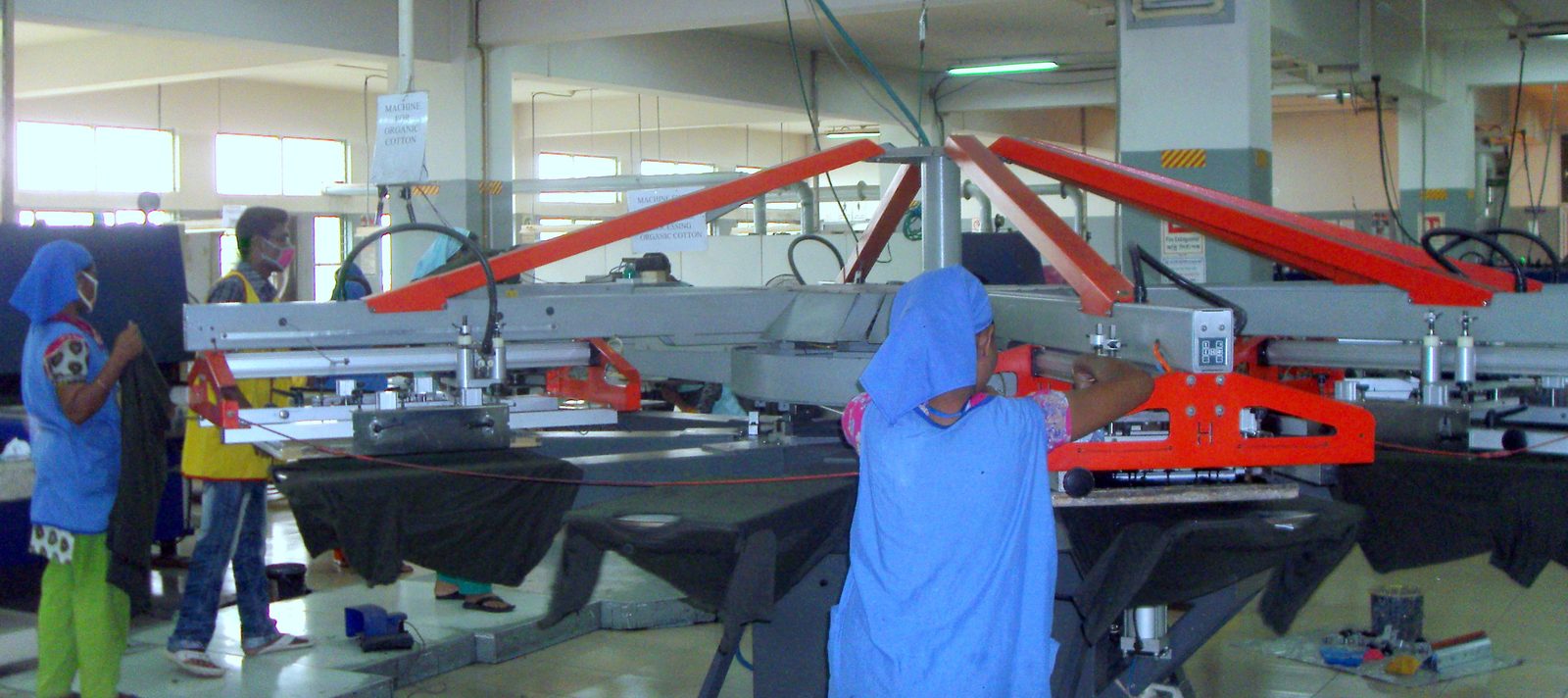
File photo: An octopus printing machine in a Bangladesh garment factory, photographed in April 2012. This contextual image does not show the wage-board meeting or November 2026 protests. Photograph unchanged.
File photo: An octopus printing machine in a Bangladesh garment factory, photographed in April 2012. This contextual image does not show the wage-board meeting or November 2026 protests. Photograph unchanged. Fahad Faisal / Wikimedia Commons / CC BY-SA 4.0

Bangladesh’s garment wage board will hold its postponed third meeting on 23 November, with employers expected to submit their proposed minimum monthly wage. The announcement sets a new date for negotiations as workers continue protesting over pay and factory closures.

Dhaka Tribune reported that a board notice issued on Tuesday, 17 November, confirmed the meeting. AFP, in a separate report published by Dawn, also confirmed the date and reported fresh clashes between garment workers and police on Tuesday. No agreed new minimum wage has been announced in those reports.

The workers’ representatives submitted a proposal for a Tk32,000 minimum monthly wage at the board’s second meeting on 9 November, according to Dhaka Tribune. Employers did not present a figure then. They asked for seven working days to prepare their offer, but the board allowed four working days.

The third meeting was initially scheduled for Monday, 16 November. It was postponed at short notice after workers’ representative Md Anwar Hossain became ill, Dhaka Tribune reported. AFP separately quoted a source in the Bangladesh Garment Manufacturers and Exporters Association confirming that a workers’ representative’s illness caused the postponement.

The distinction between a negotiating proposal and a final wage matters. The Tk32,000 figure is the proposal submitted by workers’ representatives, rather than an approved rate. AFP reported that workers taking part in street protests were demanding Tk30,000, against a current minimum of Tk12,500. The two amounts describe different demands and should not be treated as an agreed position across the workforce.

For workers, the talks concern household expenses as well as the future of production. AFP reported that protesters cited rising food, housing, transport and healthcare costs. One worker interviewed by the agency expressed concern that the wage board might not adequately reflect workers’ demands. Another said workers wanted to return to their machines.

Employers’ organisations have also called for negotiations to restart. In a joint statement reported by AFP, the Bangladesh Garment Manufacturers and Exporters Association and the Bangladesh Knitwear Manufacturers and Exporters Association urged an early resumption of wage discussions. Their proposed wage figure was not disclosed in the reports reviewed.

The delay comes amid disruption in industrial areas. AFP reported that police used tear gas and stun grenades during Tuesday’s protests, while protesters blocked the Dhaka–Mymensingh highway. It also reported brick throwing and vehicles being set alight. Border Guard Bangladesh said it had increased patrols and was monitoring the situation. These reports do not establish a comprehensive account of responsibility for each incident.

Factory suspensions add another concern for workers. Both Dhaka Tribune and AFP described the use of Section 13(1) of the labour law, under which disruptions can lead to closures on a no-work, no-pay basis. The reports give different snapshots of factory shutdowns, so there is no single verified current total presented here.

The government formed the wage board on 1 November, according to Dhaka Tribune. There is uncertainty about implementation: the newspaper said the board’s first meeting envisaged a new structure from December, while AFP reported an announcement in December and implementation in January. A definitive implementation date therefore remains unresolved in the available reporting.

The next concrete step is the employers’ submission on 23 November. Workers will then be able to compare that offer with the representatives’ proposal. Until negotiations produce a confirmed decision, neither a new wage amount nor a settled timetable for its introduction can be presented as final.
Sources & further readingDhaka Tribune: Postponed RMG wage board meeting rescheduled for Nov 23Dawn / AFP: Bangladesh garment workers, police clash in fresh wage protest
NEXT STORY Business

Bangladesh projects become eligible for US development financing

Dhaka welcomes access to DFC support for private investment. No specific project approvals, financing total or disbursement timetable have been announced in the statements.

ScrollBeat DeskOpen this article
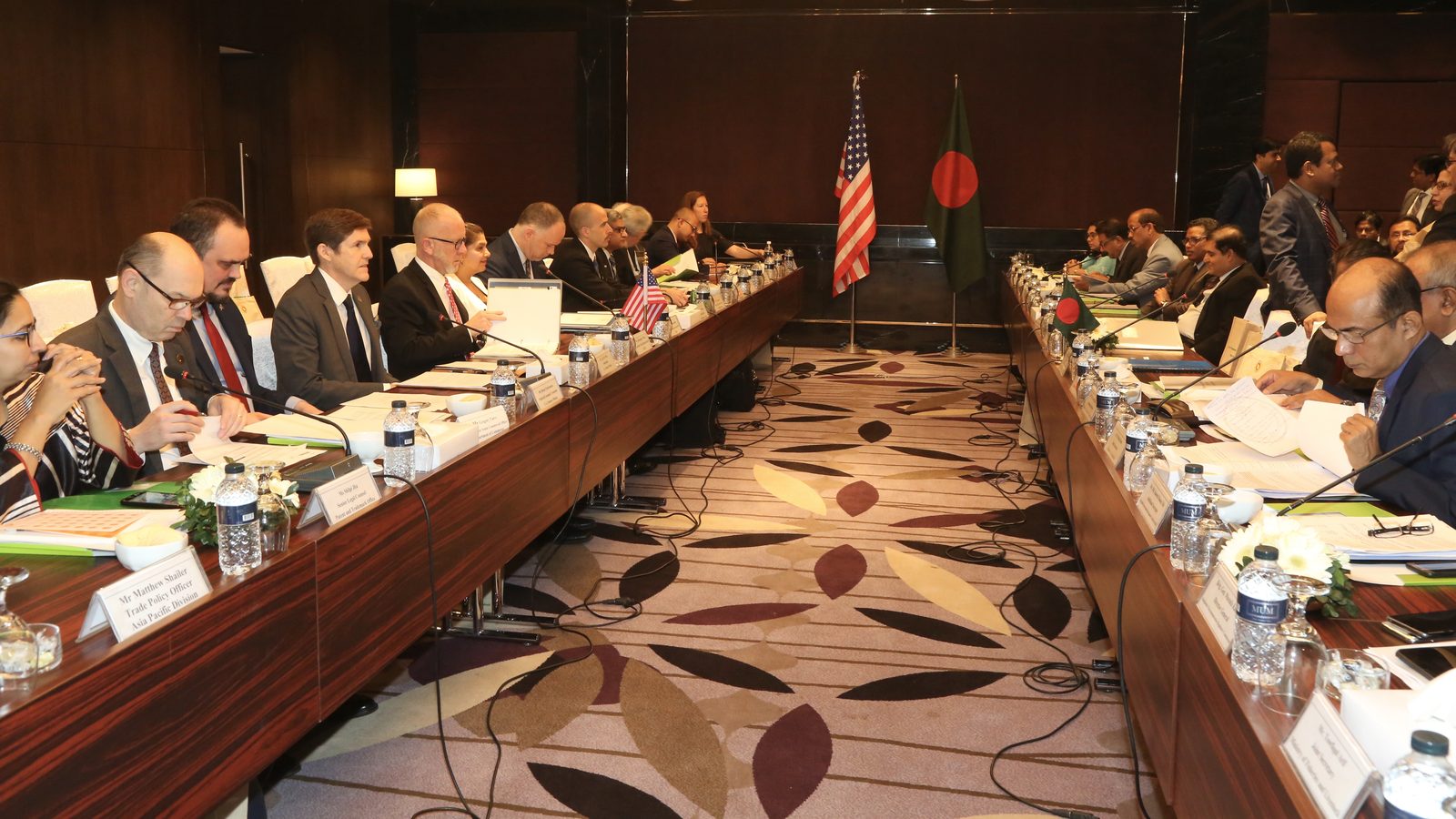
US and Bangladesh representatives at a March 2020 trade relationship meeting in Dhaka, shown as a historical file photograph.
File photo: US and Bangladesh representatives at a trade relationship meeting in Dhaka in March 2020. This photograph provides background on bilateral economic ties and does not show the November 2026 DFC announcement. U.S. Embassy Dhaka

Projects in Bangladesh are now eligible for financing from the US International Development Finance Corporation (DFC), creating a new route for private investment in infrastructure, energy and technology. Bangladesh’s Foreign Ministry welcomed the decision on Tuesday, 17 November, a day after the US agency announced the change.

The decision opens access to development finance and tools intended to reduce investment risks. It does not, by itself, establish that a particular project has received funding. The announcements reported by BSS and UNB did not identify approved projects in Bangladesh, a total financing commitment or a date for the first disbursement.

For Bangladesh, the immediate significance is the opportunity to attract capital for commercially viable projects that face difficulty securing investment. DFC says its financing and risk-mitigation instruments can help bridge those gaps, including where perceived risks discourage private investors. The agency is the US government’s international development finance institution and also supports American foreign-policy objectives.

In its Tuesday statement, the Foreign Ministry said the new eligibility followed sustained diplomatic engagement with Washington. It expected access to DFC support to attract US investment, bring in private capital and encourage more American businesses to participate in Bangladesh’s economy.

The ministry also described the decision as a sign of international confidence in Bangladesh’s economic prospects and its efforts to improve the investment environment and labour standards. Those assessments represent the government’s interpretation of the announcement; the reports did not provide an independent evaluation of the reforms or their results.

DFC chief executive Ben Black presented the move as an opportunity to deepen the economic partnership. In the agency’s statement, reported by BSS and UNB, he said support for critical infrastructure could create economic opportunities in Bangladesh while serving US strategic interests.

US Ambassador to Bangladesh Brent T Christensen linked the financing opportunity to Washington’s wider trade approach. He said open economies and reciprocal trade could support growth, and described the Agreement on Reciprocal Trade as a public commitment to that approach. DFC financing, he said, could help turn the stated goals into economic benefits for both countries.

The agency’s regional priorities provide some context for what may follow. DFC says its South Asia investments focus on energy, critical infrastructure and technology. It argues that such investments can create jobs, improve essential services and strengthen local businesses. These are the intended benefits of its development-finance work, rather than outcomes already demonstrated by the Bangladesh decision.

The next question is which projects will turn the new access into actual investment. The statements express support for commercially viable, development-focused proposals, but leave the size, terms and timing of any Bangladesh financing unspecified. For businesses and the public, future project announcements will be needed to show where funding goes and what services or employment it delivers.

Sources & further readingBSS: Bangladesh welcomes DFC eligibilityUNB via Dhaka Tribune: Bangladesh welcomes US DFC financingBSS: Bangladesh becomes eligible for US development financing